



SHOP BY FISHING TECHNIQUE

BEGINNER
New to Surface Iron

FINESSE
Small Bait

YO-YO
Deep Yellowtail

HEAVY
Strong Current

HEAVY
Deep Drops
9 products
Sort by:
9 products
9 products

When the yellowtail aren't on the surface — when they're holding deep on a hard-bottom spot off the back side of Catalina, stacked on a bank out of Point Loma, or pinned to structure at the Coronados — you stop throwing surface iron and you drop the 6X. This is the yo-yo iron West Coast anglers have trusted for decades to get down to the fish and trigger a reaction bite on the way back up.
At 6.4 oz and 6 inches, the 6X Heavy is the middle weight of the Salas yo-yo lineup and the one most local anglers end up fishing most. It has enough mass to hold vertical in real current without being the anchor that a 9.8 oz PL-68 becomes on a light setup. If you own one yo-yo iron and you fish Southern California, this is usually the one.
The 6X also carries the widest belly of any yo-yo iron Salas makes at 1¼ inches. That extra width gives it a broader flash profile on the retrieve — more surface catching light as it comes up, which matters when you're trying to pull a fish off the bottom from a distance. Every 6X is hand-cast and hand-painted in Southern California, so each one comes out a little different. The slight finish and weight variations aren't flaws — they're the mark of an iron built one at a time.
Why the 6X Heavy Belongs in Your Bag
Most yo-yo irons are either too light to hold vertical in current or too heavy to fish comfortably on a standard setup. The 6X Heavy hits the middle — heavy enough to stay on the spot, light enough to fish all day. Its 1¼" belly is the widest in the Salas line, throwing a broader flash profile than any other yo-yo iron they make. That extra flash is what pulls fish from a distance in low-visibility water, and it's why this jig has been a SoCal staple for decades.
When Iron Beats Everything Else
Surface iron works when fish are up. When they're not — when they're pinned to structure, holding on a hard-bottom bank, or sitting 80 feet down and refusing to move — the yo-yo is the answer. The 6X Heavy gets down fast, stays vertical in current, and triggers reaction bites on the way up that nothing else will produce. It's the jig you reach for when the surface bite dies and the fish are still there.
Built For These Fish and Situations
- Species: Yellowtail, bonito, barracuda, dorado, white seabass (opportunistic)
- Techniques: Yo-yo jigging, high-speed retrieve, deep drop
- Conditions: Deep structure, hard bottom, moderate to heavy current, low-light and dirty water
- Locations: Catalina Island, Coronado Islands, Point Loma banks, offshore high spots, San Clemente Island
- Depth range: 40–200+ ft depending on current and conditions
The Right Pick If...
- You fish Southern California day trips and want one yo-yo iron that covers most situations
- The fish are marked deep and won't come up for surface iron
- You're dealing with moderate to strong current that sweeps lighter irons off vertical
- You want the widest flash profile in the Salas yo-yo lineup
- You're targeting yellowtail on structure at Catalina, the Coronados, or offshore banks
Which Salas Iron Should You Throw?
The 6X Heavy sits in the middle of the yo-yo range. Step down to the Jr weights for shallower water and lighter current; step up to the 7X Heavy or PL-68 for deep banks and heavy conditions.
| Model | Weight | Body L × W | Style |
|---|---|---|---|
| 7X Jr | 2.1 oz | 5 3/8" × 1" | Surface iron |
| O Pop | 3.2 oz | 6 1/8" × 1 3/8" | Surface iron / popper |
| 7X Light | 3.5 oz | 6 3/8" × 1 1/8" | Surface iron |
| 6X Jr Heavy | 4.8 oz | 4 5/8" × 1" | Yo-yo |
| 7X Jr Heavy | 4.8 oz | 5 3/8" × 1" | Yo-yo |
| 6X Heavy (this jig) | 6.4 oz | 6" × 1 1/4" | Yo-yo |
| 7X Heavy | 8.1 oz | 6 3/8" × 1 1/8" | Yo-yo |
| PL-68 Heavy | 9.8 oz | 7 1/2" × 1 1/8" | Yo-yo |
Width measured at the belly. Every Salas iron is hand-cast and hand-painted — weights and dimensions vary slightly between units.
6X Heavy or 7X Heavy? The 7X Heavy is 8.1 oz and 6 3/8" long but narrower at 1 1/8". The 6X Heavy is 6.4 oz, slightly shorter at 6", and wider at 1 1/4". In practice the 6X is the everyday local yo-yo iron and the 7X Heavy is what you reach for when depth or current beats it. If you're buying your first full-weight yo-yo iron for Southern California day trips, start with the 6X.
Key Features
- 6.4 oz — middle weight of the Salas yo-yo lineup, holds vertical in real current
- 1¼" belly width — the widest of any Salas yo-yo iron, maximum flash on the retrieve
- 6" body length — compact enough for a fast retrieve, heavy enough to stay on the spot
- Hand-cast and hand-painted in Southern California — slight variation is part of the product
- Available in 16 hand-painted colors plus a Chrome Single Hook option
- Typically rigged with a heavy-duty treble hook; Chrome Single Hook ships with a single hook
- Sold individually (1 jig per order)
Models & Specs
| Spec | Detail |
|---|---|
| Model | Salas 6X Heavy (yo-yo) |
| Weight | 6.4 oz |
| Body length | 6" |
| Width at belly | 1 1/4" — widest yo-yo iron in the Salas line |
| Style | Yo-yo iron |
| Hook | Heavy-duty treble (standard colors); single hook (Chrome Single Hook option) |
| Construction | Hand-cast, hand-painted |
| Quantity | 1 jig per order |
| Origin | Made in Southern California, USA |
Each jig is hand-made — weight and dimensions vary slightly unit to unit.
Hooks and Options
Salas irons are typically rigged with a heavy-duty treble hook. The Chrome Single Hook option ships with a single hook and a bare plated finish, priced separately from the hand-painted colors. A single hook is easier to remove, does less damage to fish you plan to release, and causes fewer tangles on a crowded rail. A treble gives more points of contact on a fish that strikes short. Neither is universally better — it comes down to how and where you fish.
Picking a Color
Down deep, light is scarce and contrast matters more than fine detail. High-contrast and bright patterns generally out-produce subtle ones on the yo-yo.
| Conditions | Start Here | Why |
|---|---|---|
| Low light, overcast, dirty or deep water | Wounded Soldier, Scrambled Egg, Baby Poop | High-contrast patterns that stay readable where light is scarce |
| Red crab hatches and reddish forage | Red Crab, Red White | Direct match when yellows are keyed on crab |
| Sardines and mackerel on the meter | Blue White, Blue Mackerel, Mint Sardine, Blue Sardine | Baitfish tones matching what the fish are eating |
| Bright sun, clean blue water | Mint, Mint White | The traditional SoCal answer when light penetrates well |
| Green or off-color water | Green Sardine, Green Yellow | Higher contrast so the jig stays visible |
| Dorado and bright pelagic patterns | Dorado, Tumbled Dorado, Rainbow Sardine | Bright profiles for aggressive, competitive fish |
Color availability changes constantly — check the option menu above for what's in stock now.
How to Fish the Yo-Yo
Drop it straight down — to the bottom, or to the depth where you're marking fish. The moment it lands, wind as fast as you can turn the handle and keep winding all the way to the boat. Do not pump the rod. Speed is what triggers the bite, and most strikes come partway up rather than at the bottom.
At 6.4 oz the 6X holds vertical better than the Jr weights, so you keep contact in current instead of drifting off the spot. If the jig feels like it's fluttering or vibrating oddly, it's spinning rather than swimming — usually twisted line or an uneven retrieve.
Recommended gear:
- Rod: 7–8 ft fast-taper jig rod with real backbone for pulling fish off structure
- Reel: High-speed conventional, 6:1 or faster — retrieve speed is the technique
- Line: 40–65 lb depending on depth and structure
- Leader: 40–50 lb fluorocarbon; go heavier around rocks and hard structure
Tackle Express Tips
- If you only buy one Salas yo-yo iron for local fishing, make it this one — it covers the widest range of local conditions. The wide belly throws more flash than the narrower irons, which is an advantage in dirty water but a liability when fish are spooky. Go narrower if the wide profile is getting refused.
- A slow reel costs you fish. Yo-yo is a speed technique and gear ratio matters more than most anglers expect. Watch your line on the drop too — yellowtail eat it falling, and the only tell is the line going slack early.
- If you fish a crowded rail or release a lot of fish, the single hook option is worth a look. Lock up your drag early over structure — a yellow that gets its head down will find the rocks.
FAQ
What hook does it come with?
Salas irons are typically rigged with a heavy-duty treble hook. The Chrome Single Hook option ships with a single hook instead and is priced separately. Select the configuration you want by name in the option menu above.
Should I choose a single hook or a treble?
A single hook is easier to remove, does less damage to fish you plan to release, and causes fewer tangles on a crowded rail. A treble offers more points of contact on a fish that strikes short. Pick based on how you fish rather than assuming one is better.
How is the 6X Heavy different from the 6X Jr Heavy?
The 6X Heavy is 6.4 oz and 6" long. The 6X Jr Heavy is 4.8 oz and 4 5/8" — noticeably lighter and shorter. The Jr suits moderate depth and lighter current; the 6X Heavy holds vertical in more current and gets down faster.
Should I get the 6X Heavy or the 7X Heavy?
The 6X Heavy at 6.4 oz is the everyday local choice. The 7X Heavy at 8.1 oz is the step up for deeper banks and heavier current. If it's your first full-weight yo-yo iron for Southern California day trips, start with the 6X.
Do I need a high-speed reel?
It makes a real difference. Yo-yo fishing depends on retrieve speed, and a 6:1 or faster reel moves the jig the way the technique requires. A slower reel will still catch fish, just fewer.
Are all the jigs identical?
No. Each one is hand-cast and hand-painted, so weight, dimensions, and paint detail vary slightly from jig to jig. That variation is part of the product, not a defect.
Complete the Setup
- Salas 6X Jr Heavy — 4.8 oz compact version for shallower water
- Salas 7X Jr Heavy — 4.8 oz, longer and slimmer profile
- Salas 7X Heavy — 8.1 oz for deeper banks and heavier current
- Salas PL-68 Heavy — 9.8 oz, the heaviest iron in the line
- Shop all yo-yo jigs | Shop yellowtail lures | Shop all Salas
Not sure how heavy to go, or which hook setup you want? Come see us at Tackle Express on Soledad Canyon Road in Santa Clarita. We fish these on local boats and out of San Diego, and we'd rather talk you into the right one than sell you the wrong one.

When yellowtail are boiling around a kelp paddy off Catalina, pushing bait along the Channel Islands kelp lines, or chasing sardines through the La Jolla canyons, the Salas 7X Light Surface Iron Jig is what goes on first. This is not a trendy jig. It has been earning its spot in Southern California tackle bags for over 50 years because it does exactly what a surface iron needs to do: casts a country mile, lands flat, and swims with a side-to-side kick that yellowtail cannot leave alone.
The 7X Light Profile — Built for the Long Cast and the Slow Swim
At 3.5 oz and 6 3/8 inches, the 7X Light sits in the sweet spot that works equally well on the iron rods of a full-day sportboat or off the bow of a private boat drifting into a Baja kelp paddy. The offset hips give it a slower, wider kick than a straight-body iron, which matters when yellows are picky or water temps are running cool. When the fish want a fast burn, you can speed it up. When they want it lazy, you can slow it down. Few surface irons cover that much range.
Every 7X is hand-cast and hand-painted in Southern California, so each one comes out slightly different. Small variations in finish and weight are normal and expected. This is not factory-perfect paint, and it was never meant to be.
The Right Pick If...
- You throw surface iron for yellowtail off Catalina, the Channel Islands, or San Diego
- You want the standard-size 7X profile rather than the smaller Jr or a deep yo-yo iron
- You fish a dedicated iron stick and a conventional jig reel and want a jig that swims at a range of retrieve speeds
- You want a hand-made Southern California iron with a 50-year track record, not a mass-produced import
Best Fishing Techniques
- Long-cast surface iron retrieves along kelp lines and boiler rock
- Fan-casting kelp paddies for yellowtail and dorado
- Slow-wind presentations when fish are showing but not committing
- Working the shady side of a paddy from the bow of a sportboat
- Casting to breezing or boiling surface-feeding fish
Best Conditions
- Fish pushing bait to the surface — boils, breezers, and working birds
- Kelp edges, paddies, and shallow structure where a deep jig would hang up
- Clean to lightly off-color water where a natural baitfish profile reads well
- Morning grey light and glassy conditions when a slow, wide kick outfishes speed
Best For
- Species: Yellowtail, calico bass, dorado, barracuda, bonito, surface-feeding tuna
- Techniques: Surface iron casting, kelp paddy fishing, kelp-line retrieves, structure casting
- Use Cases: SoCal sportboat jig stick, private boater kelp paddy setup, Baja long-range surface iron
Key Features
- 3.5 oz surface iron weight — stays up top through the retrieve instead of digging down
- 6 3/8" body with offset hips — produces a wide, slow side-to-side kick rather than a tight wobble
- Long-casting profile — reaches paddies and kelp lines you cannot get to with a bait
- Hand-cast and hand-painted in Southern California — each jig is individually finished
- Shares the 7X body shape with the 7X Heavy yo-yo iron — same silhouette, opposite sink rate
- Available in a deep color range covering clear water, green water, and low light
- Sold individually, typically rigged with a heavy-duty treble hook
Where the 7X Light Shines
- Yellowtail working Catalina and Channel Islands kelp structure
- Kelp paddy fishing from La Jolla to Ensenada and south
- Coastal kelp edges when fish are pushing bait to the surface
- Calico bass over shallow kelp and boiler rock
- Baja sessions on yellowtail, dorado, and surface-feeding tuna
Models & Specs
| Spec | Detail |
|---|---|
| Model | Salas 7X Light |
| Weight | 3.5 oz |
| Body length | 6 3/8" |
| Width at belly | 1 1/8" |
| Style | Surface iron (light) |
| Hook | Typically rigged with a heavy-duty treble hook |
| Construction | Hand-cast, hand-painted |
| Quantity | Sold individually (1 jig) |
| Origin | Made in Southern California, USA |
Because each jig is hand-made, weight and dimensions vary slightly unit to unit.
Which Salas Iron Should You Throw?
The 7X Light is the standard-size surface iron. If you want a smaller profile for picky fish, drop to the 7X Jr. If the fish are deep and will not come up, you want a yo-yo iron instead.
| Model | Weight | Body L × W | Style |
|---|---|---|---|
| 7X Jr | 2.1 oz | 5 3/8" × 1" | Surface iron |
| O Pop | 3.2 oz | 6 1/8" × 1 3/8" | Surface iron / popper |
| 7X Light (this jig) | 3.5 oz | 6 3/8" × 1 1/8" | Surface iron |
| 6X Jr Heavy | 4.8 oz | 4 5/8" × 1" | Yo-yo |
| 7X Jr Heavy | 4.8 oz | 5 3/8" × 1" | Yo-yo |
| 6X Heavy | 6.4 oz | 6" × 1 1/4" | Yo-yo |
| 7X Heavy | 8.1 oz | 6 3/8" × 1 1/8" | Yo-yo |
| PL-68 Heavy | 9.8 oz | 7 1/2" × 1 1/8" | Yo-yo |
Width is measured at the belly, the jig's widest point. Every Salas iron is hand-cast and hand-painted, so weights and dimensions vary slightly between units.
Worth knowing: the 7X Light and 7X Heavy share the same 6 3/8" body. Same silhouette in the water, very different sink rate — one stays up top, one gets down. Anglers who like the 7X profile often carry both.
Picking a Color
Color matters less than presentation on the iron, but it matters. Match the bait first, then adjust for light and water clarity.
| Conditions | Start here | Why |
|---|---|---|
| Sardines on the surface, clean water | Blue & White, Blue Sardine, Mint Sardine | Baitfish tones that read natural in clear water |
| Bright sun, flat calm | Mint, Mint White | The traditional SoCal kelp-line answer on a glassy morning |
| Green or off-color water | Scrambled Egg, Green Yellow, Baby Poop | Higher contrast so the jig stays visible |
| Low light, early grey, overcast | Green Black, Wounded Soldier | Dark topside silhouettes against a bright surface |
| Dorado around paddies and kelp | Dorado, Tumbled Dorado, Rainbow Sardine | Bright profiles for aggressive, competitive fish |
| Red crab hatches, calico over kelp | Red Crab, Red White | Matches red crab and other reddish forage |
Color availability changes constantly. Check the color menu above this description for what we can ship right now.
How to Fish It
Cast it as far as you can, let it settle for a beat so it lands flat, then start a slow, steady wind with the rod tip low. You are looking for a wide, lazy side-to-side roll, not a fast wobble. If the jig is spinning or tracking flat, you are winding too fast. Slow down until you feel the kick load up on the rod tip.
On a full-day boat, work the kelp edges and the shady side of a paddy first. Let the jig sink deeper before you start the retrieve when fish are showing under the surface rather than boiling on top.
Recommended Gear
- Rod: 8–9 ft moderate-action surface iron stick
- Reel: Conventional narrow-spool jig reel in the 200–300 class
- Line: 30–50 lb mono or a mono top shot — mono's stretch protects against pulled hooks on a head-shaking yellow
- Leader: 30–40 lb fluorocarbon in clear, calm water off Catalina or the islands; heavier around Baja structure
Tackle Express Tips
- Slow is almost always the answer. Most anglers new to the iron burn it back way too fast. If you are not sure, wind slower.
- Let it land flat. Feather the cast at the end so the jig hits the water sideways instead of nose-first. It starts swimming immediately instead of tumbling.
- Fan your casts around a paddy instead of hitting the same lane. Yellows often sit on one specific side of the shade line.
- Carry the same color in two shades of brightness. When the bite dies on one, the other frequently restarts it.
Common Mistakes
- Winding too fast. Kills the side-to-side kick and turns the jig into a spinning tube.
- Fishing straight braid to the jig. No stretch means pulled hooks on the head shake. Run a mono top shot.
- Setting the hook like a bass fisherman. Keep winding and let the rod load. Swinging on the bite pulls the iron away from the fish.
- Reaching for the 7X Light when the fish are deep. A 3.5 oz surface iron will not get down. Switch to a yo-yo iron.
- Rinsing and packing it wet. Rinse in fresh water and let it dry fully before it goes back in the jig bag.
Frequently Asked Questions
Salas irons are typically rigged with a heavy-duty treble hook. Hook configuration can vary across the Salas range — where a specific option ships with a single hook, that is stated in the option name. Same 6 3/8" body and the same profile in the water, but the Light is 3.5 oz and the Heavy is 8.1 oz. The Light is a surface iron you throw and wind back on top. The Heavy is a yo-yo iron you drop deep and crank back fast. Different techniques entirely. The 7X Jr is smaller and lighter at 2.1 oz and 5 3/8". Go to the Jr when fish are keyed on small bait or acting picky. Stay with the 7X Light when you need casting distance or the bait is bigger. 30–50 lb mono, or braid with a mono top shot. The stretch matters — straight braid to a surface iron pulls hooks on head-shaking yellowtail. You are almost certainly winding too fast. Slow the retrieve until you feel a wide, rhythmic side-to-side kick loading the rod tip. Retrieve speed is the single biggest variable in fishing the iron. Yes, and that is normal. These are hand-painted irons and the finish takes a beating from teeth, rails, and rocks. Chipped paint does not stop the jig from catching fish — plenty of anglers swear their beat-up irons fish better. No. Each one is hand-cast and hand-painted, so weight, dimensions, and paint detail vary slightly from jig to jig. That variation is part of the product, not a defect. Yes. It was designed around SoCal and Baja yellowtail, but surface irons work anywhere pelagic fish push bait to the surface. Customers have fished them well outside the West Coast.What hook does the Salas 7X Light come with?
What is the difference between the 7X Light and the 7X Heavy?
How is the 7X Light different from the 7X Jr?
What line should I use with a surface iron?
Why does my jig spin instead of swimming?
Will the paint chip?
Are all the jigs identical?
Can I fish the 7X Light outside Southern California?
Complete the Setup
- Salas 7X Jr Surface Iron — smaller 2.1 oz profile for picky fish and small bait
- Salas O Pop — 3.2 oz with a concave face for surface commotion
- Salas 7X Heavy Yo-Yo — same body, 8.1 oz, for when fish hold deep
- Salas 6X Heavy Yo-Yo — the classic deep yellowtail yo-yo iron
- Salas PL-68 Heavy Yo-Yo — 9.8 oz for deep water and heavy current
- Shop all surface irons | Shop all Salas
Questions about which iron to throw? Come see us at Tackle Express on Soledad Canyon Road in Santa Clarita. We fish these jigs on local boats and out of San Diego, and we would rather talk you into the right one than sell you the wrong one.

The Salas 6X Jr Yo-Yo Jig is the shortest, stoutest iron Salas makes — 4.8 oz in a compact 4 5/8" profile. It's not a scaled-down version of the 6X; it's a different tool designed for a different situation. When baitfish are small and thick, when yellowtail are keyed on short, dense forage, or when you're fishing in current where a longer iron blows out of the strike zone before it can be worked properly, the 6X Jr is the right choice. It sinks fast, swims tight, and covers water efficiently at depths where the bite is happening.
Built for Short, Thick Forage
The 6X Jr's compact profile was designed to match smaller baitfish that longer irons can't accurately imitate. When yellowtail, tuna, or white seabass are eating small sardines, smelt, or squid and ignoring longer jigs, switching down to the 6X Jr gives you the size profile that matches the hatch. The heavy body also means it holds depth better in current than lightweight jigs of the same size, so you can work it at the right depth even when there's water movement pushing lighter iron off-track.
Hand-Cast in Southern California
Salas irons are hand-cast in California — not stamped, not CNC-machined offshore. Each jig is individually poured, which gives Salas irons their characteristic action variability and the reason experienced yo-yo anglers sort through packs to find the ones that swim best. The 6X Jr is available in the full Salas color lineup, including proven producers like Scrambled Egg, Mint, Wounded Soldier, and Dorado — plus chrome and holographic finishes for high-visibility conditions.
The Right Pick If...
- Baitfish on the meter are small and dense and the standard 6X profile isn't matching the forage
- You're yo-yoing in current or wind and need a compact iron that sinks fast and stays in the zone
- You want to fish a shorter stroke — the 6X Jr responds well to a quick, aggressive yo-yo retrieve without blowing out
- You're targeting calico bass or shallow-water yellowtail where a shorter iron is easier to work close to structure
- You need to step down from the standard 6X when fish are short-striking or bumping without committing
Best Fishing Techniques
- Yo-yo retrieve — let it sink to depth, then crank fast and drop; the compact body creates a tight, erratic action on the drop
- Iron jigging near structure — compact profile works tight to kelp edges and rocky bottom without fouling as easily as longer irons
- Surface iron — the 6X Jr can be cast and worked on or near the surface when fish are up and feeding on small bait
- Vertical jigging — drop straight down and work with short, sharp lifts when fish are stacked tight on the meter
Best Conditions
- Spots with current where longer irons blow out of the zone
- Small bait conditions — sardines, smelt, squid, or thin anchovies
- Shallow to mid-depth structure: 40–120 ft
- Kelp paddies, nearshore islands, and inshore reefs
Best For
- Yellowtail — especially on small bait or in current
- White seabass — when they're keyed on small forage
- Calico bass — near structure where short iron is more practical
- Bluefin and yellowfin tuna — on small bait conditions
Key Features
- Weight: 4.8 oz
- Length: 4 5/8"
- Hand-cast in Southern California
- 18 color options including sardine patterns, chrome, holographic finishes, and proven local producers
- Compact yo-yo profile — fast sinking, tight action on the drop
- Rigged with quality split ring; add your preferred hook (single Siwash or assist recommended)
Color Guide
| Color | SKU | Best Conditions |
|---|---|---|
| Green Sardine | SLS060 | Clear water, sardine forage |
| Scrambled Egg | SLS061 | All-around producer; low light and overcast |
| Blue White | SLS062 | Clear water, anchovy forage |
| Red White | SLS063 | Squid conditions; sunrise/sunset |
| Tumbled Dorado | SLS064 | Mixed bait, offshore color |
| Mint | SLS065 | Clear water; bright sun |
| Blue Sardine | SLS066 | Blue-water sardine forage |
| Green Yellow | SLS067 | Kelp edge; mixed bait |
| Wounded Soldier | SLS068 | Proven all-around producer |
| Mint Sardine | SLS069 | Clear water; sardine forage |
| Red Crab | SLS071 | Crab spawn; low light |
| Mint White | SLS072 | Bright conditions; clear water |
| Baby Poop | SLS070 | Dirty water; low visibility |
| Blue Green Rainbow Sardine | SLS073 | Blue water; mixed forage |
| Dorado | SLS074 | Offshore; mahi conditions |
| Egg Sardine | S6XES | Low light; overcast |
| Chrome | SALAS-6XJR-CHRME | High visibility; bright sun; clear water |
| Chrome Blue Holo Back | SALAS-6XJR-CHRMEBLUBK | Blue water; high sun; sardine forage |
Tackle Express Tips
- Rig the 6X Jr with an Owner Stinger Siwash or similar single hook on the tail split ring — single hooks improve hookup rate on the yo-yo and reduce twist compared to trebles. Size 4/0–5/0 works for most conditions.
- When yo-yoing in current, let the jig fully settle to depth before starting your retrieve. The 6X Jr sinks fast — count it down and let it get to the fish rather than starting the retrieve mid-water column where nothing is holding.
- Keep 2–3 colors with you: a natural sardine or anchovy pattern for clear days, Scrambled Egg or Wounded Soldier for low light or overcast, and chrome or Mint for high sun and visibility conditions. The right color at the right time consistently outperforms working one color all day.
FAQ
What's the difference between the 6X Jr and the standard 6X Heavy?
The 6X Jr is shorter and lighter (4.8 oz, 4 5/8") than the 6X Heavy (6.4 oz, 5 1/4"). The Jr is designed for smaller bait conditions and situations where a compact profile matches the forage better. The standard 6X sinks deeper and covers more water on a longer retrieve. Use the Jr when bait is small or you need to fish a shorter, tighter action; use the 6X when you need more weight or a longer profile.
Does the 6X Jr come with a hook?
Salas irons ship with a split ring but no hook installed — this lets you rig your preferred hook style and size. Most local anglers use a single Siwash hook (Owner Stinger Siwash in 4/0 or 5/0 is a common choice) or a short assist hook for yo-yo applications.
Which colors produce best for yellowtail?
Scrambled Egg, Wounded Soldier, and Mint are consistent year-round producers. Green Sardine and Blue Sardine work well when fish are keyed on sardines. Chrome and Chrome Blue Holo Back are strong picks on high-sun, clear-water days when flash draws strikes from distance.
Shop More Salas Irons
- Salas 7X Jr Heavy — same compact concept, longer and slightly heavier
- Salas 6X Heavy — 6.4 oz when you need more depth and current penetration
- Salas 7X Heavy — 8.1 oz for deep banks and heavy structure
- Salas PL-68 Heavy — 9.8 oz, the heaviest iron in the Salas line

The Salas 7X Heavy puts 8.1 oz into the same 6 3/8" body as the 7X Light — the same profile, nearly double the weight. That density is the point. When you need to punch through current, get to depth faster than lighter iron allows, or keep contact with the bottom in a strong surge, the 7X Heavy gets there and stays there. It's the go-to yo-yo iron for deep banks, heavy structure, and the conditions where lighter iron gets pushed out of the bite zone before it can be worked properly.
More Weight, Same Profile
The 7X Heavy shares its body geometry with the 7X Light, which means the swimming action and profile are identical — only the sink rate and depth capability change. Fish that are dialed into the 7X profile on surface iron will respond to the same shape on the yo-yo at depth. This matters on days when fish move off the surface into the water column: you can stay on the same lure shape without switching to a completely different iron. The heavier body also means less blow-out in current and a faster, more direct drop to depth.
Hand-Cast in Southern California
Like all Salas irons, the 7X Heavy is hand-cast in California — individually poured, not stamped or machined. The result is the subtle action variability that Salas irons are known for, and the reason experienced anglers sort through packs to find the swimmers. Available in 6 proven colors covering the full range of conditions from clear-water sardine imitation to mackerel and low-light patterns.
The Right Pick If...
- You're fishing deep banks (100–200+ ft) where lighter iron takes too long to reach the strike zone
- There's current or surge that pushes 4–6 oz irons off-track before they can be worked properly
- Fish are holding tight to structure at depth and you need the iron to sink fast and stay vertical
- You want the 7X profile for yo-yo work while the 7X Light covers your surface iron setup
- You're targeting large yellowtail, tuna, or amberjack in heavy water where a heavier iron drives hooksets better
Best Fishing Techniques
- Deep yo-yo — count it to depth, crank fast to mid-water, drop again; the heavy body drops fast and stays vertical in current
- Bottom yo-yo on structure — let it touch bottom and immediately crank; the heavy body tracks straight and triggers reaction strikes from fish holding tight to structure
- Heavy current drift fishing — drop on a drifting boat and work the iron as the boat moves; the weight keeps it fishing rather than blowing sideways
- Vertical jigging — short, sharp lifts when fish are stacked on the meter; the heavier body gives more controlled action on slow lifts
Best Conditions
- Deep structure: 80–200+ ft
- Strong current or surge conditions where lighter iron blows out
- Offshore banks and deep-water reefs
- Long-range trips where fish are holding deep or in heavy water
Best For
- Yellowtail — deep structure and heavy current
- Bluefin and yellowfin tuna — deep yo-yo on offshore banks
- Amberjack and large pelagics — heavy water and deep reefs
- White seabass — deep structure at depth where 4–5 oz iron won't reach
Key Features
- Weight: 8.1 oz
- Length: 6 3/8"
- Hand-cast in Southern California
- 6 color options covering sardine, mackerel, low-light, and natural patterns
- Same body as 7X Light — identical profile, different density
- Rigged with split ring; add your preferred single hook or assist
Color Guide
| Color | SKU | Best Conditions |
|---|---|---|
| Scrambled Egg | SLS010 | All-around producer; overcast and low light |
| Mint | SLS011 | Clear water; bright sun |
| Mint Sardine | SLS012 | Clear water; sardine forage |
| Baby Poop | SLS-7xHVY-BBY | Dirty water; low visibility; mixed forage |
| Green Mackerel | SLS013 | Mackerel forage; kelp edge; green water |
| Yellow | SLS0015 | High visibility; deep water; off-color conditions |
Tackle Express Tips
- At 8.1 oz, the 7X Heavy pairs best with a stout conventional rod in the 40–80 lb range — a rod with too light a tip won't load properly on the yo-yo stroke and will fatigue your arm before the fish does. The Phenix Black Diamond Conventional or similar heavy conventional blank is the right match.
- Use 65–80 lb braid as your main line with a 40–60 lb fluorocarbon top shot when yo-yoing at depth — the braid cuts current and telegraphs the strike up from depth better than straight mono. Keep the top shot short (10–15 ft) so the connection clears your guides cleanly on the cast.
- Green Mackerel and Scrambled Egg are the two most consistent colors in deep-water conditions where light penetration is low. If fish are on the meter but not committing, try slowing your retrieve on the drop — let the iron flutter rather than fall straight and give reluctant fish more time to commit on the way down.
FAQ
What's the difference between the 7X Heavy and the 7X Light?
Same 6 3/8" body, different density. The 7X Light is 3.5 oz and designed for surface iron fishing where you want a slower sink and more time in the upper water column. The 7X Heavy is 8.1 oz and built for deep yo-yo work where you need the iron to reach depth quickly and stay vertical in current. Use the Light for topwater and near-surface; use the Heavy when fish are holding at depth or in heavy water.
How does the 7X Heavy compare to the 6X Heavy?
The 7X Heavy (8.1 oz, 6 3/8") is heavier and longer than the 6X Heavy (6.4 oz, 5 1/4"). The 7X profile is longer and slimmer, which gives it a different swimming action — more of a side-to-side flutter on the drop. The 6X is shorter and stouter, which creates a tighter, more compact action. Both are proven deep yo-yo irons; the choice comes down to body profile preference and target depth.
Does the 7X Heavy come with a hook?
Salas irons ship with a split ring but no hook. Most local anglers rig a single Siwash hook (Owner Stinger Siwash 5/0–6/0 is a common choice for the heavier iron) or a short assist hook for deep yo-yo applications.
Shop More Salas Irons
- Salas 7X Light — same 6 3/8" body at 3.5 oz, for surface fishing
- Salas 6X Heavy — 6.4 oz, the everyday local yo-yo iron
- Salas PL-68 Heavy — 9.8 oz, the heaviest iron in the line
- Salas 7X Jr Heavy — 4.8 oz for moderate depth and lighter current
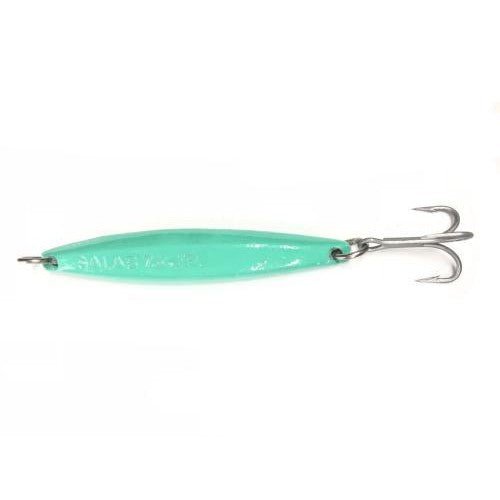
The Salas 7X Jr Heavy is 4.8 oz in a 5 3/8" body — longer and slimmer than the 6X Jr, lighter than the 7X Heavy, and purpose-built for the moderate-depth, moderate-current situations that neither of those irons handles as well. It's the middle of the Salas yo-yo lineup in both profile and weight: enough length to produce a distinctive flutter on the drop, enough weight to reach and hold depth without blowing out in average current conditions. When the bite is happening between 40 and 100 feet and the forage is mid-sized, the 7X Jr Heavy is usually the right call.
The Slim Profile Advantage
The 7X Jr's longer, slimmer body creates a different action than the shorter, stouter 6X Jr. Where the 6X Jr swims tight and compact, the 7X Jr has more side-to-side flutter on the drop — a wider, more erratic sink that triggers strikes from fish that are watching but not fully committed. This makes it particularly effective in clear water and bright conditions where fish have more time to inspect the lure before committing. The same profile that makes the 7X Light effective as a surface iron translates on the yo-yo at moderate depths.
Hand-Cast in Southern California
Like all Salas irons, the 7X Jr Heavy is hand-cast in California. Six colors cover the core conditions: sardine and mint patterns for clear water, Scrambled Egg for overcast and low light, Blue and White for anchovy-forage days, and Chrome for high-visibility flash in bright sun.
The Right Pick If...
- You're fishing 40–100 ft and want more flutter on the drop than the shorter 6X Jr provides
- Baitfish are mid-sized — larger than the forage that calls for the 6X Jr but not big enough to warrant a full-size 7X Heavy
- Current is moderate and lighter iron is reaching the zone without blowing out
- Fish are in clear water and need a wider, more natural-looking flutter to commit
- You want a yo-yo iron that matches the profile of the 7X Light you're already fishing on the surface
Best Fishing Techniques
- Standard yo-yo — count to depth, crank fast and drop; the slim body creates a wide flutter on the fall that triggers reaction strikes
- Slow flutter retrieve — crank a few turns and pause; the 7X Jr plane-glides on slow descents, effective when fish are following but short-striking
- Near-surface yo-yo — at 4.8 oz it's light enough to work effectively in the top 40 ft when fish are pushed up but not fully on the surface
- Iron casting — the slim profile casts well; can be worked with a medium-paced retrieve near the surface when fish are up
Best Conditions
- Moderate depth: 40–100 ft
- Light to moderate current where heavier iron isn't needed
- Clear water conditions where flutter action and profile matter
- Mid-sized bait conditions — larger sardines, small mackerel, medium anchovies
Best For
- Yellowtail — moderate depth and clear-water conditions
- White seabass — when keyed on mid-sized forage at depth
- Calico bass — near structure in 40–80 ft
- Bluefin and yellowfin tuna — when fish are mid-column and not fully up
Key Features
- Weight: 4.8 oz
- Length: 5 3/8"
- Hand-cast in Southern California
- 6 color options covering sardine, mint, anchovy, and chrome patterns
- Slim flutter profile — wider drop action than the 6X Jr; lighter than the 7X Heavy
- Rigged with split ring; add your preferred single hook or assist
Color Guide
| Color | SKU | Best Conditions |
|---|---|---|
| Mint | SALAS-7XJR-HVY-MNT | Clear water; bright sun |
| Mint Sardine | SALAS-7XJR-HVY-MNTSRD | Clear water; sardine forage |
| Scrambled Egg | SALAS-7XJR-HVY-SCRAMEGG | All-around producer; overcast and low light |
| Blue and White | SALAS-7XJR-HVY-BLUWHTE | Anchovy forage; clear blue water |
| Mint White | SALAS-7XJR-HVY-MNTWHT | Bright conditions; clear water; sardine mix |
| Chrome | SALAS-7XJR-HVY-CRM | High visibility; bright sun; clear water flash |
Tackle Express Tips
- The 7X Jr Heavy's flutter action is most effective when you give it time on the drop — don't rush the retrieve. Let it sink a full count past the fish on the meter before cranking. Fish that are watching will often commit during the sink, not the crank.
- For hook setup, a 4/0–5/0 Owner Stinger Siwash on the tail split ring is the standard local rigging. The slim profile of the 7X Jr makes a shorter assist hook a good option too — it reduces tail fouling on the cast and gives more hook exposure on the strike.
- Chrome is underutilized on the 7X Jr. On high-sun days in clear water when fish are visible on the surface or in the top 20 ft, a Chrome 7X Jr cast into the school and worked with a fast erratic retrieve will draw reaction strikes from fish that ignore slower sardine patterns.
FAQ
What's the difference between the 7X Jr Heavy and the 6X Jr Heavy?
Both weigh 4.8 oz but have different body profiles. The 6X Jr is shorter (4 5/8") and stouter — a compact, tight-action iron best for small bait conditions and situations where you want a shorter stroke. The 7X Jr is longer (5 3/8") and slimmer — a wider flutter action better suited to mid-sized forage and clear-water conditions where the lure gets more inspection time. Choose the 6X Jr when bait is small; choose the 7X Jr when you want more flutter and a longer profile.
How does the 7X Jr Heavy relate to the 7X Light?
Same 5 3/8" body, very different weight. The 7X Light is 2.1 oz and designed for surface and near-surface fishing. The 7X Jr Heavy is 4.8 oz for yo-yo and mid-column work. If you're fishing both surface and yo-yo on the same trip, the 7X Light and 7X Jr Heavy let you cover both scenarios with the same lure profile.
Does the 7X Jr Heavy come with a hook?
No — Salas irons ship with a split ring only. Add your preferred single hook (Owner Stinger Siwash 4/0–5/0 is the local standard) or a short assist hook for yo-yo applications.
Shop More Salas Irons
- Salas 7X Jr Light — same 5 3/8" body at 2.1 oz for surface fishing
- Salas 6X Jr Heavy — 4.8 oz, shorter and stouter profile
- Salas 6X Heavy — 6.4 oz for more depth and current
- Salas 7X Heavy — 8.1 oz for deep banks and heavy structure

The Salas 7X Jr is 2.1 oz in a 5 3/8" body — the lightest iron Salas makes. It's built for finesse surface fishing: light line, light tackle, and situations where a full-size surface iron is too heavy to work correctly. At 2.1 oz the 7X Jr dances on the surface rather than pushing through it, creating the erratic side-to-side action that calico bass, picky yellowtail, and light-bite fish respond to when heavier irons get refused. If you're fishing 15–20 lb fluorocarbon on a spinning or light conventional setup, this is your iron.
Light Enough to Work, Heavy Enough to Cast
The challenge with light surface irons is castability — at 2.1 oz the 7X Jr is light enough to work the surface properly but still heavy enough to cast on appropriate tackle. On a 7–8 ft spinning rod in the 15–25 lb class you get adequate distance for calico and inshore yellowtail fishing without the setup being so heavy that the iron gets pushed underwater on the retrieve. This is the iron for calico bass kelp edge fishing, light-tackle yellowtail when the bite is picky, and any situation where a 3–5 oz iron is simply too much weight for the technique or the fish.
Hand-Cast in Southern California
Like all Salas irons, the 7X Jr is hand-cast in California — individually poured, not mass-produced offshore. Six colors cover the conditions most common in inshore and nearshore fishing: mint and sardine patterns for clear water, Green Black for kelp-edge calico situations, Scrambled Egg for low light, and Blue and White for anchovy-forage days.
The Right Pick If...
- You're fishing calico bass on the kelp edge with light spinning or conventional gear
- Yellowtail are on top but picky — refusing heavier irons and responding better to a smaller, lighter presentation
- You're fishing 15–25 lb fluorocarbon or light braid and want an iron that balances correctly on that tackle weight
- Fish are hitting small bait near the surface and a 3+ oz iron is too heavy to stay in the strike zone
- You want to pair with the 7X Jr Heavy for same-profile coverage from surface to mid-water column
Best Fishing Techniques
- Surface casting — fast erratic retrieve: Cast past the school or structure, engage immediately, and crank fast with rod tip up; the light body dances erratically on the surface and draws reaction strikes
- Slow surface walk: Reel slowly and let the iron wander side to side; effective for calico bass holding tight to kelp who want a slower-moving target
- Burn and pause: Fast retrieve with brief pauses; the iron flutters slightly on the pause and often draws the strike during the hesitation
- Near-surface swing: Cast across current and let the iron swing through the water column at 1–5 ft depth with a slow retrieve; works for yellowtail staged near the surface in current
Best Conditions
- Calm to moderate surface conditions where fish are visibly working on top
- Kelp edge and nearshore reef fishing for calico bass
- Light bait conditions — small sardines, anchovies, smelt
- Light-tackle setups: spinning or light conventional in the 15–25 lb class
Best For
- Calico bass — kelp edge and structure fishing with light gear
- Yellowtail — finesse surface fishing when fish are picky or on small bait
- Bonito and barracuda — fast surface retrieve; the light iron matches the small bait these species are often eating
- Any inshore species responding to light surface iron presentations
Key Features
- Weight: 2.1 oz
- Length: 5 3/8"
- Hand-cast in Southern California
- 6 color options covering sardine, mint, kelp-edge, and anchovy patterns
- Lightest iron in the Salas lineup — built for finesse surface presentations on light tackle
- Rigged with split ring; add a treble or single hook depending on target species
Color Guide
| Color | SKU | Best Conditions |
|---|---|---|
| Mint Sardine | SLS020 | Clear water; sardine forage |
| Mint | SLS021 | Clear water; bright sun |
| Green Sardine | SLS022 | Green water; sardine forage; kelp edge |
| Green Black | SLS023 | Kelp edge; calico bass; low visibility |
| Scrambled Egg | SLS024 | Overcast; low light; all-around producer |
| Blue and White | SLS7X-BLWT | Anchovy forage; clear blue water |
Tackle Express Tips
- For calico bass on the kelp edge, Green Black and Green Sardine are the two most consistent colors. Fish tight to the kelp canopy — cast so the iron lands within a foot of the kelp line and start your retrieve immediately. Calico bass strike fast and close to cover; a hesitant presentation gives them time to return to structure.
- At 2.1 oz, the 7X Jr pairs best with a 7–8 ft spinning rod in the 15–25 lb class or a light conventional setup with similar ratings. Too heavy a rod overpowers the iron and prevents it from working correctly on the surface; too light and you lose casting distance and the ability to drive a hookset.
- For yellowtail that are on top but refusing heavier irons, step down to the 7X Jr and speed up your retrieve significantly — fast enough that the iron skips and skitters. This triggers reaction strikes from fish that are watching but not committing to slower presentations.
FAQ
What's the difference between the 7X Jr and the 7X Light?
Both are surface irons but different sizes. The 7X Jr is 2.1 oz at 5 3/8" — lighter and shorter, designed for light-tackle calico bass and finesse yellowtail fishing. The 7X Light is 3.5 oz at 6 3/8" — heavier and longer, casts farther and works better in wind or when you need more distance. Choose the 7X Jr for lighter setups and picky fish; choose the 7X Light when you need casting distance or heavier current.
What hook setup works best for the 7X Jr?
For calico bass, a single Siwash hook (Owner Stinger Siwash 2/0–3/0) is the local standard — better hookup rate in cover and less risk of fouling on kelp. For yellowtail and open-water species, a small treble (Owner ST-36 or similar in #2–1/0) gives more hook exposure for faster-moving fish. Match hook size to the split ring — don't oversize the hook or it will affect the iron's surface action.
Can I yo-yo the 7X Jr?
At 2.1 oz it's too light for effective yo-yo work at any meaningful depth. If you need yo-yo coverage with the same 7X Jr profile, the Salas 7X Jr Heavy (4.8 oz) is the same body built for the yo-yo retrieve.
Shop More Salas Irons
- Salas 7X Light — 3.5 oz full-size surface iron for distance and wind
- Salas O Pop — 3.2 oz with a concave face for surface commotion
- Salas 7X Jr Heavy — same body, 4.8 oz, for when fish hold deep

The PL-68 is the end of the line — 9.8 oz and 7 1/2 inches, the heaviest and by a clear margin the longest iron Salas makes. Nothing else in the lineup comes within an inch of it. This is the jig you bring when depth, current, or the size of the fish beats everything else in your bag.
Two things happen when you go this big. The obvious one is that it gets down and stays down: at 9.8 oz in a relatively narrow 1 1/8" body, the PL-68 cuts current and holds vertical where an 8.1 oz 7X Heavy starts sliding. The less obvious one is profile. That extra length is a genuinely bigger silhouette in the water, which matters when fish are eating full-size mackerel or larger forage — you are matching a bigger meal, not just fishing deeper.
This is a specialist. On a calm day over a local high spot it is more jig than the situation calls for, and you will wear yourself out cranking it. Bring it for the deep banks, the hard current, and the long-range trips where the alternative is not reaching the fish at all.
Every PL-68 is hand-cast and hand-painted in Southern California, so each one comes out slightly different. Small variations in finish and weight are normal and expected.
Where the PL-68 shines
- Deep banks and offshore high spots where lighter irons never reach the zone
- Hard current that sweeps 6–8 oz jigs off vertical
- Long-range trips and extended offshore runs
- Deep-holding tuna that will chase a fast-cranked iron
- Trophy yellowtail on structure that demands heavy tackle
- Days when fish are on larger forage and a bigger profile matters
Which Salas iron should you throw?
The PL-68 is the heaviest and longest iron in the line. If you are not fighting depth or current, one of the lighter yo-yo irons will fish better simply because you can work it longer.
| Model | Weight | Body L × W | Style |
|---|---|---|---|
| 7X Jr | 2.1 oz | 5 3/8" × 1" | Surface iron |
| O Pop | 3.2 oz | 6 1/8" × 1 3/8" | Surface iron / popper |
| 7X Light | 3.5 oz | 6 3/8" × 1 1/8" | Surface iron |
| 6X Jr Heavy | 4.8 oz | 4 5/8" × 1" | Yo-yo |
| 7X Jr Heavy | 4.8 oz | 5 3/8" × 1" | Yo-yo |
| 6X Heavy | 6.4 oz | 6" × 1 1/4" | Yo-yo |
| 7X Heavy | 8.1 oz | 6 3/8" × 1 1/8" | Yo-yo |
| PL-68 Heavy (this jig) | 9.8 oz | 7 1/2" × 1 1/8" | Yo-yo |
Width is measured at the belly, the jig’s widest point. Every Salas iron is hand-cast and hand-painted, so weights and dimensions vary slightly between units.
PL-68 or 7X Heavy?
The 7X Heavy is 8.1 oz in a 6 3/8" body — not far behind on weight, but a meaningfully smaller profile. The PL-68 adds 1.7 oz and a full inch of length. If your problem is purely depth, the 7X Heavy handles most of it. If your problem is depth and current, or the fish are on big bait, the PL-68 is the honest answer. Most anglers buy the 7X Heavy first and add the PL-68 for long-range and extreme days.
Specifications
| Spec | Detail |
|---|---|
| Model | Salas PL-68 Heavy (yo-yo) |
| Weight | 9.8 oz — heaviest in the Salas line |
| Body length | 7 1/2" — longest in the Salas line |
| Width at belly | 1 1/8" |
| Style | Yo-yo iron |
| Hook | Typically rigged with a heavy-duty treble hook; single tuna hook configurations are named in the option menu |
| Construction | Hand-cast, hand-painted |
| Quantity | Sold individually (1 jig) |
| Origin | Made in Southern California, USA |
Because each jig is hand-made, weight and dimensions vary slightly unit to unit.
Options, hooks, and pricing
Salas irons are typically rigged with a heavy-duty treble hook. Some options ship with a single hook instead — on the PL-68, those options say so in the option name. Pricing varies between configurations, so check the option menu above this description for what is current.
| Option | Finish | Hook |
|---|---|---|
| Blue White | Standard hand-painted | Heavy-duty treble |
| Blue Mackerel | Standard hand-painted | Heavy-duty treble |
| Scrambled Egg | Standard hand-painted | Heavy-duty treble |
| Rockfish | Standard hand-painted | Heavy-duty treble |
| Glow White | Glow finish, priced separately | Heavy-duty treble |
| Blue White w/ Single Tuna Hook | Blue White hand-painted | Single tuna hook, priced separately |
| Glow White w/ Single Tuna Hook | Glow finish | Single tuna hook, priced separately |
Anglers pick a single hook for easier unhooking, less damage to fish they intend to release, and fewer tangles in the rail on a crowded boat. A treble gives more points of contact on a short-striking fish. Neither is universally better — it comes down to how and where you fish.
Picking a color
The PL-68 usually fishes deep, and down there light is scarce. Contrast and glow matter more than fine detail.
| Conditions | Start here | Why |
|---|---|---|
| Deepest drops, dirty water, low light | Glow White | Stays visible where painted finishes stop reading |
| General deep-water yellowtail | Scrambled Egg | The classic high-contrast yo-yo color |
| Sardines and mackerel on the meter | Blue White, Blue Mackerel | Baitfish tones matching what the fish are eating |
| Fishing hard bottom and rocky structure | Rockfish | Matches bottom-dwelling forage over reef and hard structure |
Color availability changes constantly. Check the option menu above this description for what we can ship right now.
How to fish it
Drop it straight down — to the bottom, or to the depth where you are marking fish. The moment it lands, wind as fast as you can turn the handle and keep winding all the way to the boat. Do not pump the rod. Speed triggers the bite, and most strikes come partway up rather than at the bottom.
At 9.8 oz you get down quickly even in current, which is the whole reason to fish it. The tradeoff is real: cranking this weight repeatedly is hard work, and most anglers get fewer drops per hour with it than with a 6X Heavy. Pick your moments — drop it when you are marking fish rather than searching blind.
Recommended gear
- Rod: Heavy fast-taper jig rod rated for 8–12 oz, with the backbone to turn fish off deep structure
- Reel: High-speed conventional, 6:1 or faster, with the capacity and cranking power for deep drops
- Line: 50–80 lb depending on depth, current, and how heavy the structure is
- Leader: 50–60 lb fluorocarbon; go heavier around rock and hard structure
Pro tips from the shop
- Do not fish it blind. Drop it on marks. At this weight you get a limited number of good drops before you are gassed.
- Undersized gear ruins it. A rod that will not handle 9.8 oz makes every drop a fight with your own tackle.
- Watch your line on the drop. At this weight fish frequently eat it falling, and the tell is line going slack early.
- Glow finishes benefit from a few seconds under a light before the drop.
- If you fish a crowded rail or release a lot of fish, the single tuna hook options are worth the difference.
Common mistakes
- Buying it as your first yo-yo iron. Start with a 4.8 or 6.4 oz jig. The PL-68 is a specialist for depth and current, not a general-purpose iron.
- Fishing it in moderate depth. It will catch fish, but a lighter iron works better and you will last longer.
- Winding too slowly. Yo-yo is a speed technique. If your arm is not tired, you are going too slow.
- Pumping the rod. Wind steadily with the rod low. Pumping creates slack and kills the action.
- Packing it away wet. Rinse in fresh water and dry it fully before it goes back in the bag.
Frequently asked questions
Salas irons are typically rigged with a heavy-duty treble hook. On the PL-68, the two options named “w/ Single Tuna Hook” come with a single tuna hook instead and are priced separately. Select the configuration you want by name in the option menu above. A single tuna hook is easier to remove, does less damage to fish you plan to release, and causes fewer tangles on a crowded rail. A treble offers more points of contact on a fish that strikes short. Pick based on how you fish rather than assuming one is better. Yes. At 9.8 oz it is the heaviest, and at 7 1/2" it is also the longest. The next step down is the 7X Heavy at 8.1 oz and 6 3/8". If your problem is depth alone, the 7X Heavy at 8.1 oz handles most of it. The PL-68 adds weight for hard current and a substantially longer profile for bigger forage. Most anglers own the 7X Heavy first and add the PL-68 for long-range and extreme conditions. The Glow White finish and the single tuna hook configurations are priced separately from the standard hand-painted colors. Check the option menu above for current pricing on each. A heavy fast-taper jig rod rated for 8–12 oz, a high-speed conventional reel at 6:1 or faster, and 50–80 lb line depending on depth and structure. Undersized gear makes this weight miserable to fish. No, but that is where it earns its keep. Any time depth or current beats your other irons — including local deep banks on a hard tide — the PL-68 is the tool. No. Each one is hand-cast and hand-painted, so weight, dimensions, and paint detail vary slightly from jig to jig. That variation is part of the product, not a defect.What hook does it come with?
Should I choose a single hook or a treble?
Is the PL-68 the heaviest Salas iron?
Should I get the PL-68 or the 7X Heavy?
Why are some options priced differently?
What rod and line does it need?
Is it only for long-range trips?
Are all the jigs identical?
Complete the setup
- Salas 7X Heavy — 8.1 oz, the step down for deep water without extreme current
- Salas 6X Heavy — 6.4 oz, the everyday local yo-yo iron
- Salas 7X Jr Heavy — 4.8 oz for moderate depth and lighter current
- Shop all yo-yo jigs | Shop tuna lures | Shop all Salas
Heading out on a long-range trip? Come see us at Tackle Express on Soledad Canyon Road in Santa Clarita before you go. We will help you sort out which weights and hook setups you actually need to pack rather than selling you one of everything.
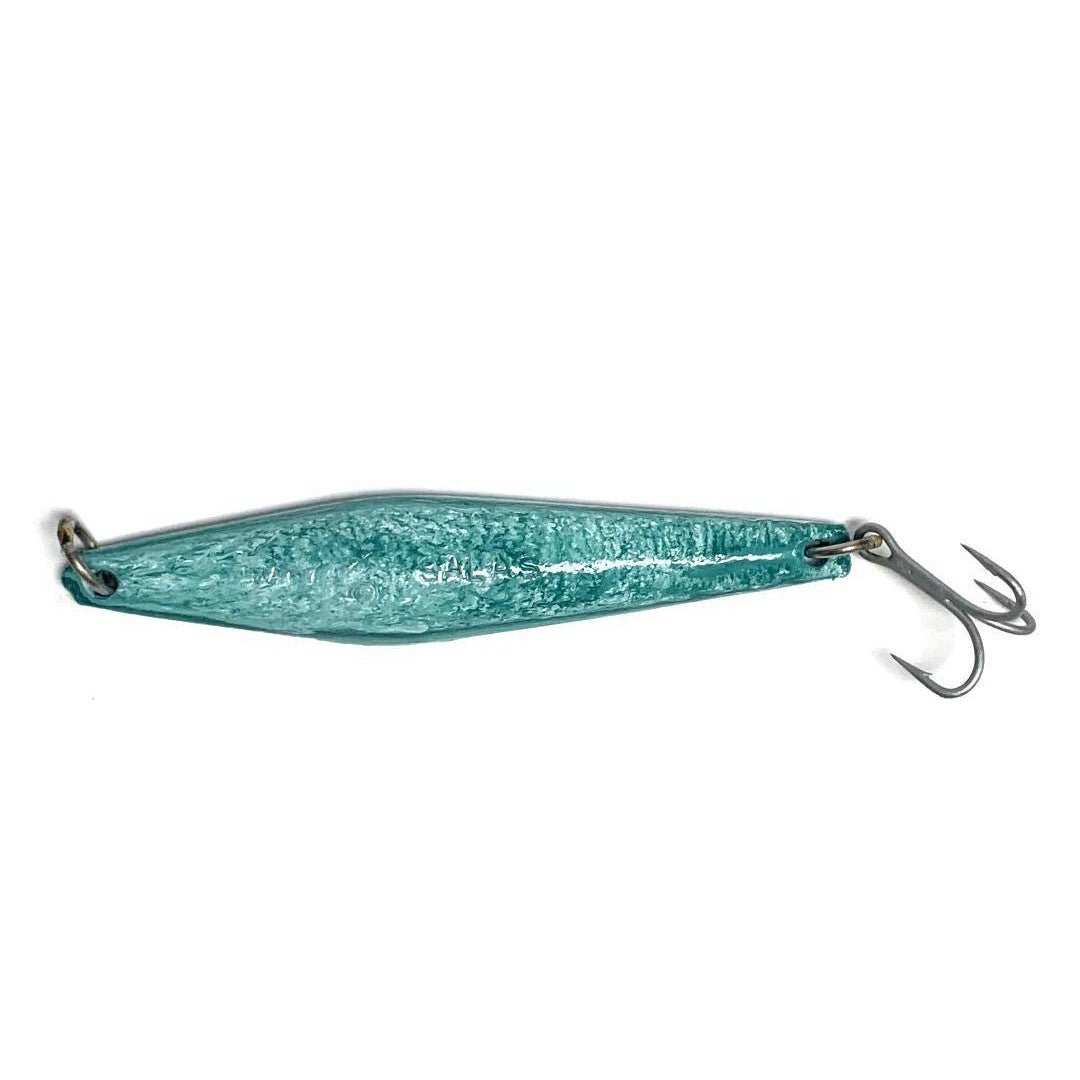
Legendary West Coast Surface Iron Performance
The Salas Baby 5X Surface Iron Jigs are a proven fish-catching machine with decades of success on West Coast tuna, yellowtail, and dorado. Hand-crafted in Southern California with meticulous attention to detail, these legendary surface irons deliver the erratic swimming action and irresistible flash that trigger explosive strikes from aggressive pelagics. The Baby 5X size is perfectly balanced for long-distance casting and versatile enough to handle everything from schoolie yellowfin to trophy-class yellowtail.
Proven Design and Construction
- Hand-Crafted Quality: Each jig is individually made in the USA with attention to detail that ensures consistent performance
- Optimized Weight Distribution: Perfectly balanced for maximum casting distance and ideal swimming action
- Durable Chrome Finish: Classic chrome plating provides maximum flash and withstands repeated strikes and saltwater exposure
- Premium Treble Hook: Sharp, strong hook ensures solid hookups on aggressive strikes
- Baby 5X Size: Ideal weight and profile for a wide range of pelagic species and conditions
Deadly Surface Iron Action
The Baby 5X excels with the classic yo-yo retrieve that West Coast anglers have relied on for generations. Cast the iron out, let it sink briefly, then retrieve with a rhythmic rod-pumping action that creates an erratic swimming motion. The jig darts and flashes as it moves through the water column, mimicking a fleeing baitfish and triggering reaction strikes from tuna, yellowtail, dorado, and other pelagics. The chrome finish creates maximum flash that attracts fish from a distance, while the proven shape and weight distribution ensure the jig swims perfectly on every retrieve.
Versatile Applications
Whether you're fishing the kelp beds for yellowtail, working tuna boils offshore, targeting dorado around floating debris, casting to surface-feeding bonito and skipjack, or searching for roosterfish in Baja waters, the Baby 5X delivers consistent results. The size is perfect for matching smaller baitfish while still having enough weight for long casts to distant boils and feeding frenzies. The durable construction handles the punishment of hard-fighting pelagics day after day.
West Coast Tradition
Salas surface irons have been a staple in Southern California and Baja tackle boxes for over 50 years, earning their reputation through consistent performance on the water. The Baby 5X continues this tradition, combining time-tested design with quality craftsmanship that serious West Coast anglers trust. From party boats to private vessels, from San Diego to Cabo, the Baby 5X has proven itself on countless trophy fish and remains a go-to choice when pelagics are on the bite.
Experience the proven performance that generations of West Coast anglers have relied on. The Salas Baby 5X Surface Iron isn't just a jig—it's a piece of fishing history that continues to produce results season after season.
Catch more pelagics with Salas Baby 5X Surface Iron Jigs—where tradition meets proven performance.

The Salas O Pop is the widest-body iron Salas makes — 3.2 oz with a concave cupped face that pushes and displaces water on the retrieve. Where a standard surface iron swims side to side on a flat face, the O Pop creates surface commotion: a popping, splashing action that draws fish from distance and triggers strikes from yellowtail, dorado, and surface-feeding pelagics that are looking for a noisy, high-visibility target. It's not a replacement for the 7X Light or 7X Jr — it's a different tool for a different situation, and on the right day it outperforms every conventional surface iron in the box.
The Concave Face Changes Everything
The O Pop's cupped face is what separates it from the rest of the Salas surface iron lineup. On a standard retrieve, the concave face catches water and creates a popping splash with each sweep of the rod or turn of the handle. This surface disturbance does two things: it draws fish from a distance who feel the pressure wave before they see the lure, and it creates a feeding trigger for fish that are keyed on baitfish being pushed or injured at the surface. In flat-calm conditions when a standard iron's subtle action isn't enough to pull fish from depth, or when birds are working and you want to match the commotion of the feeding frenzy, the O Pop is the call.
Hand-Cast in Southern California
The O Pop is hand-cast in California like all Salas irons — individually poured in small runs. Eight colors cover the full range of conditions: sardine and mackerel patterns for forage-matching, Rainbow Sardine and Dorado for offshore and mixed-bait situations, and Scrambled Egg and Mint White for low-light and overcast conditions.
The Right Pick If...
- Fish are on top but the bite is slow and a standard surface iron isn't drawing strikes
- You're fishing in a feeding frenzy or birds are working and you want an iron that matches the surface commotion
- Dorado or other surface-oriented pelagics are in the area and responding to noisy presentations
- Conditions are flat calm and you need a lure that creates its own surface disturbance to draw fish up
- You want a surface iron option that triggers reaction strikes from fish that have seen too many standard irons
Best Fishing Techniques
- Pop-and-pause: Cast, let the iron settle on the surface, then pop with a sharp rod sweep and pause — the concave face throws water on the pop and the iron sits briefly before the next sweep; effective for dorado and yellowtail staged near the surface
- Fast erratic retrieve: Crank fast with the rod tip low to keep the iron working the top 1–2 ft; the cupped face creates a splashing, churning action that triggers reaction strikes from fish already in feeding mode
- Walk the dog: Slow, rhythmic rod tip twitches with controlled slack — the wide body and cupped face make the O Pop walk side to side with more splash than a standard cigar-shaped iron
- Cast into the melee: When birds are working or a school is visibly busting, cast the O Pop into the fray and retrieve fast — the surface commotion matches the feeding energy and draws immediate strikes
Best Conditions
- Flat-calm to moderate surface conditions when fish are visible on top
- Active feeding frenzies — birds working, fish busting, bait being pushed to the surface
- Dorado, yellowtail, and offshore pelagics that are up and looking for noise
- Clear water conditions where the surface splash is visible to fish from depth
Best For
- Yellowtail — surface feeding conditions and situations when standard irons go ignored
- Dorado (mahi-mahi) — aggressive surface feeders that respond strongly to popping presentations
- Bluefin and yellowfin tuna — when busting on top and looking for commotion
- Bonito and barracuda — fast, aggressive surface feeders that react to noise and flash
Key Features
- Weight: 3.2 oz
- Concave cupped face — creates surface splash and water displacement on the retrieve; unique in the Salas lineup
- Widest body in the Salas surface iron lineup
- Hand-cast in Southern California
- 8 color options covering sardine, mackerel, rainbow, dorado, and low-light patterns
- Rigged with split ring; add your preferred treble or single hook
Color Guide
| Color | SKU | Best Conditions |
|---|---|---|
| Green Sardine | SAL100 | Green water; sardine forage; kelp edge |
| Blue White | SAL101 | Clear blue water; anchovy forage |
| Scrambled Egg | SAL102 | Overcast; low light; all-around producer |
| Rainbow Sardine | SAL103 | Mixed bait; blue water; offshore conditions |
| Blue Mackerel | SAL104 | Mackerel forage; blue water |
| Green Mackerel | SAL105 | Mackerel forage; green water; kelp edge |
| Mint White | SAL106 | Bright conditions; clear water; sardine mix |
| Dorado | SAL107 | Offshore; dorado and pelagic conditions |
Tackle Express Tips
- The O Pop works best with a rod that has enough tip flex to generate the pop action without snapping the iron out of the water — a moderate-fast 7–8 ft spinning or conventional rod in the 20–40 lb class gives you the right loading to throw water on each sweep without ripping the lure sideways. Too stiff a rod and the pop becomes a jerk; too soft and you lose the sharp snap needed to move water.
- For yellowtail on the surface in flat-calm conditions, try a pop-and-pause cadence with 3–5 second pauses between pops. Let the iron sit still on the surface after each pop — the pause gives staged fish time to commit. Yellowtail will often circle the lure on the pause and strike when it moves again.
- Dorado color tip: Dorado on the surface respond exceptionally well to the Dorado and Rainbow Sardine patterns — both have the yellow-green flash that matches the baitfish dorado are typically eating offshore. If you're in dorado territory with birds working, these are your first two choices before going to a natural sardine pattern.
FAQ
How is the O Pop different from the 7X Light or 7X Jr?
The 7X Light and 7X Jr are standard flat-body surface irons that swim side to side on the retrieve. The O Pop has a concave cupped face that displaces water and creates surface splash — it's closer in concept to a metal popper than a traditional surface iron. Use the 7X series when you want a subtle, swimming presentation; use the O Pop when you want noise, splash, and surface commotion to draw fish from distance or trigger reaction strikes.
What size treble hook works best on the O Pop?
Most local anglers run a #1 or 1/0 treble (Owner ST-36 or similar) on the tail split ring. The wider body means you can slightly upsize the hook compared to the 7X Jr without affecting the lure's action significantly. For dorado and larger yellowtail, a 2/0 treble gives more hook exposure. Single Siwash hooks in 3/0–4/0 also work well and reduce fouling on the cast.
Can the O Pop be yo-yoed?
It's a surface iron — the cupped face creates drag on a vertical retrieve and it won't yo-yo effectively. For yo-yo coverage use the Salas 6X Heavy or 7X Heavy.
Shop More Salas Irons
- Salas 7X Light — 3.5 oz standard surface iron for distance and classic action
- Salas 7X Jr — 2.1 oz for small bait and picky fish on light tackle
- Salas 6X Heavy — 6.4 oz yo-yo iron for when fish hold deep
RESOURCE HUB

Surface Iron for Beginners
Why the Salas 7X is a strong first pick.

Iron Fishing Headquarters
Surface irons, yo-yo irons, jig sticks, reels.

Tackle Express Videos
Gear breakdowns, reviews, and how-to guides.

Yellowtail Collection
Tips and tricks to catch more and bigger yellows.
COMPLETE YOUR SETUP
SALAS FAQ
The Salas 7X Light is a strong first choice for anglers learning to fish surface iron. It casts well, has a proven swimming action, and works for yellowtail, bonito, barracuda, tuna, and other West Coast gamefish.
A surface iron is usually cast and retrieved near the surface to imitate a fleeing baitfish. A yo-yo iron is heavier, dropped deeper, and retrieved quickly back through the water column. Surface irons are best when fish are up and chasing bait. Yo-yo irons are best when fish are deeper or holding around structure.
Fish a yo-yo iron when yellowtail or other gamefish are marked deeper, when current is strong, when fish are holding near structure, or when they are not reacting to surface presentations. Drop the jig to the target depth, then wind fast and steady.
Salas lures are commonly used for yellowtail, tuna, bonito, barracuda, calico bass, dorado, and white seabass. They are especially popular with Southern California and Baja anglers fishing sportboats, private boats, islands, kelp lines, banks, and offshore structure.
For yellowtail on the surface, the Salas 7X Light is a classic choice. For deeper yellowtail, the Salas 6X Heavy is a reliable yo-yo iron. In heavy current or deeper water, use a heavier model like the Salas 7X Heavy or PL-68.
Popular starting colors include blue/white, mint, sardine, scrambled egg, and glow/white. Natural colors are great when fish are keyed in on bait, while brighter colors can help in low light, dirty water, or aggressive bites.
You do not need a complicated setup, but matching the rod, reel, and line to the lure matters. Surface irons work best with rods that cast well and allow the jig to swim. Yo-yo irons work best with stronger rods, fast reels, and line that can handle hard-pulling fish near structure.
Both can work. Treble hooks can help pin fish that slash at the jig, while single hooks can be easier to manage and may hold better on larger fish. The best choice depends on the target species, local rules, landing style, and personal preference.
Tackle Express is an angler-run tackle shop that fishes and understands West Coast saltwater gear. We stock proven Salas models, help anglers choose the right jig for the situation, and ship fast so your tackle gets to you before the next trip.
SHOP BY SPECIES

CA Halibut

CA Yellowtail

Tuna

White Seabass

Trout